

September 23, 2025
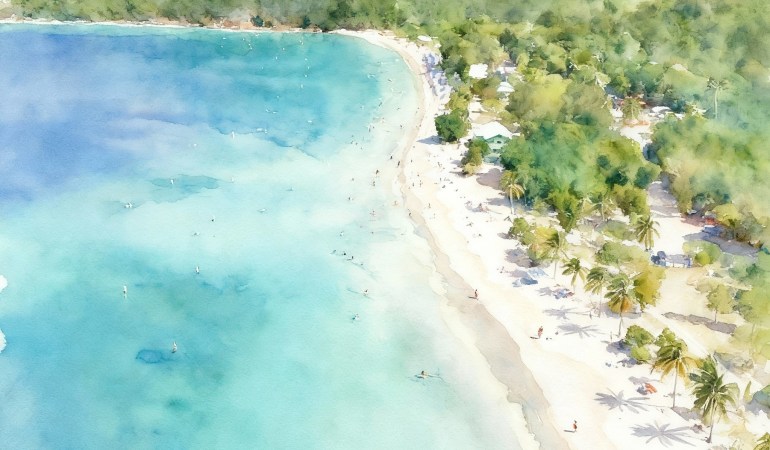
Magens Bay, with its crescent-shaped shoreline and crystal-clear waters, is cherished today as one of the most beautiful beaches in the Caribbean. But its story goes far deeper than its natural beauty—it is a place steeped in history, culture, and ecological importance. From its earliest inhabitants to colonial times and beyond, Magens Bay has long served as refuge, provider, and paradise.
Early Inhabitants & Indigenous Life
As far back as around 1,000 B.C., Magens Bay was inhabited by indigenous peoples whose way of life was deeply intertwined with the land and sea. The Taíno were among the last Amerindian communities to live here. They relied heavily on the bay’s natural resources—marine life, flora, freshwater from surrounding gullies (“guts”), and ponds—for food, culture, and survival. The bay’s biodiversity, lush surroundings, and relative seclusion made it a crucial habitat for indigenous culture and subsistence.
Colonial Era & Natural Preservation
When European powers arrived in the Caribbean, many parts of St. Thomas were developed into plantations, trading hubs, and colonial settlements. However, Magens Bay largely remained unspoiled. Its remote location, dense tropical forest, and sheltered shoreline meant that it was less attractive for agricultural development compared to other parts of the island. Over centuries of Danish administration—and later under United States governance—this natural refuge maintained much of its untouched charm.
Magens Bay Today
Today, Magens Bay stands as a powerful reminder of a past lived in harmony with nature. It’s not only a world-famous beach and tourist destination but also an ecological treasure. Its ancient forest cover, freshwater ponds, and surrounding natural features continue to support diverse plants, animals, and marine life. The preservation of the bay helps maintain a living link between the island’s indigenous, colonial, and modern histories.
Why Its History Matters
-
Cultural continuity: The traditions and survival strategies of early inhabitants like the Taíno are echoed in the way many local communities still value fishing, respect for nature, and sustainable use of resources.
-
Ecological richness: Because it has been relatively undisturbed, Magens Bay preserves ecosystems (both terrestrial and marine) that are rare elsewhere.
-
Tourism with responsibility: Its history underscores the importance of managing visitor impact so that the natural and historical integrity of Magens Bay continues for future generations.
Honoring the Past, Protecting the Future
When you visit Magens Bay—whether you’re swimming, hiking, or just relaxing—you’re stepping into a space shaped by centuries of natural forces, human care, and quiet resilience. To truly honor what makes it special, visitors are encouraged to respect its environment, follow the rules set out by the Magens Bay Authority, and support conservation efforts that preserve both its ecological and historical legacy.